
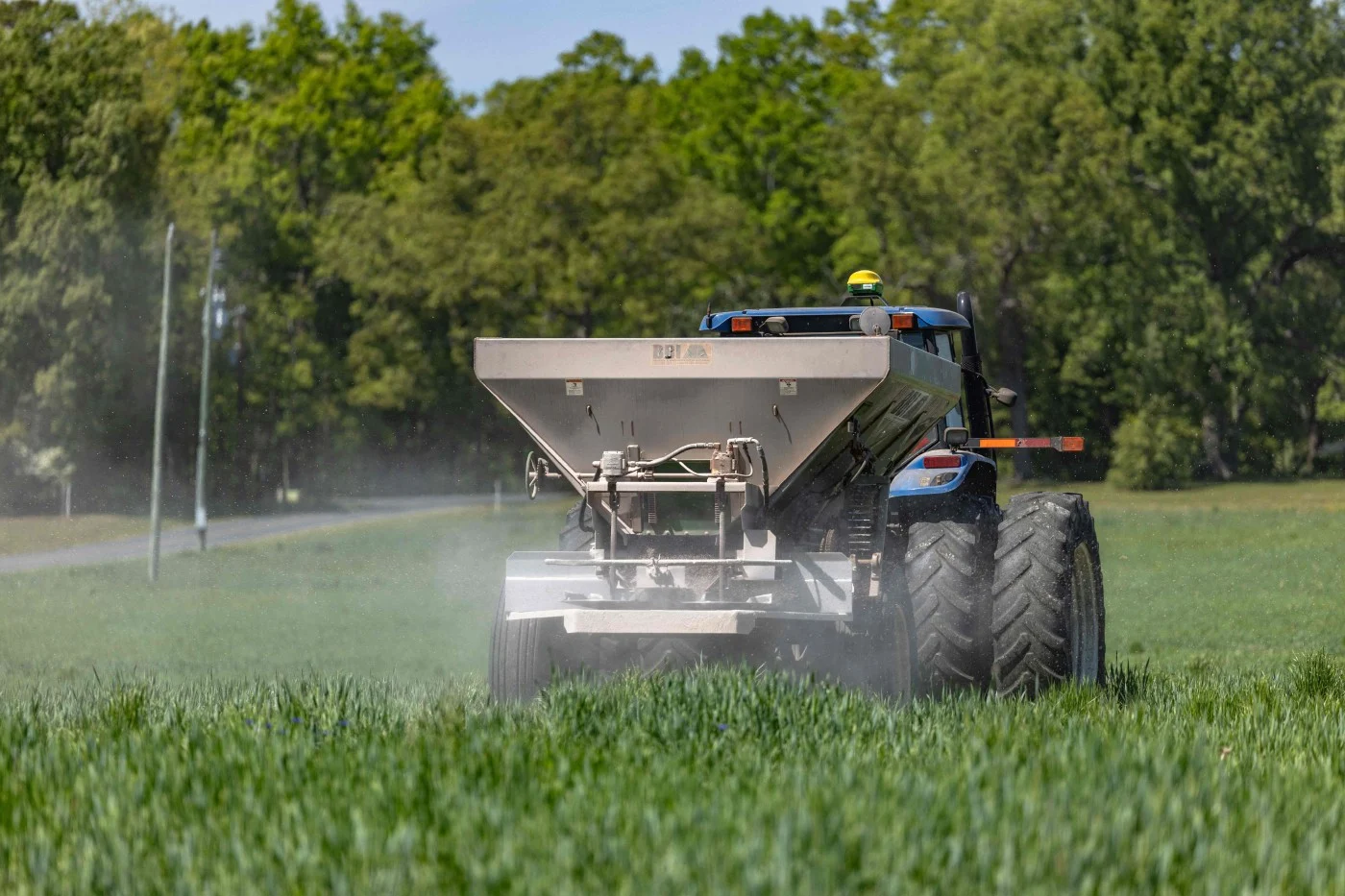
Malaysia’s food supply chain is holding firm for now against a sharp global fertiliser price shock triggered by the US-Iran conflict, but economists cautioned the pressure could reach supermarket prices within months if disruptions persist. (Photo by Grant Baldwin / AFP)
KUALA LUMPUR: Malaysia’s food supply chain is holding firm for now against a sharp global fertiliser price shock triggered by the US-Iran conflict, but economists cautioned the pressure could reach supermarket prices within months if disruptions persist.
On the ground, industry players said domestic fertiliser stocks remain adequate and farm distribution channels are functioning smoothly, offering a temporary buffer against a 50 per cent surge in global urea prices.
National Farmers Organisation (Nafas) general manager Muhammad Faris Arriffin told Business Times that fertiliser availability for Malaysian farmers remains stable and sufficient despite rising global prices and supply chain disruptions.
-Advertisement-
He said while international fertiliser prices have faced upward pressure in recent months, domestic supply in Malaysia has remained sufficient to meet current planting needs, particularly under the subsidised paddy input programme.
“Stock levels managed through Nafas remain adequate, while distribution to farmers, particularly paddy farmers under subsidy, continues without critical disruption despite the challenging global environment,” he said.
Muhammad Faris said nitrogen-, phosphate- and potash-based fertilisers were the most exposed to global market volatility, particularly urea, diammonium phosphate and muriate of potash.
He said Malaysia is dependent on imports for a substantial share of phosphate- and potash-based fertilisers, along with certain finished products and raw materials.
“This structural reliance is precisely why Nafas has put in place diversified sourcing and structured long-term procurement, so that any price volatility or temporary disruption in one corridor does not translate into supply shortages for Malaysian farmers,” he said.
Universiti Pertahanan Nasional Malaysia senior defence economics lecturer and Malaysia Institute of Economics Research senior fellow Dr Nur Surayya Mohd Saudi said changes in fertiliser prices typically take about three to nine months to be reflected in consumer food prices.
This delay is due to agricultural production cycles, where already-planted crops use earlier inputs, as well as government interventions and the gradual way retailers adjust prices.
“Fertiliser prices serve as an important early warning signal for future food inflation, particularly during prolonged geopolitical tensions that disrupt global energy and fertiliser supply chains.
“In the context of the 13th Malaysia Plan (13MP), this time lag provides a critical window for policymakers to act proactively by strengthening early warning systems, building strategic fertiliser reserves, and diversifying supply sources to stabilise prices and safeguard food security.
“Fertiliser price shocks today are a signal of food inflation tomorrow, and timely intervention is essential to protect rakyat and ensure economic resilience,” Surayya said.
A recent Fitch Ratings report said emerging Asia, including Malaysia, remains exposed to rising food costs if the US-Iran conflict persists and ongoing fertiliser supply disruptions continue.
It warned that prolonged constraints in fertiliser supply could increase production costs, weigh on crop yields and eventually lift food prices across the region later this year.
The rating agency said prices of nitrogen-based urea have jumped about 50 per cent to roughly US$700 per tonne, from around US$465 before the war.
IF SHOCKS PERSIST
Surayya said if the conflict becomes prolonged, the risk to Malaysia would extend beyond supply disruptions.
This could also trigger cost-push inflation, as higher input costs, particularly for fertiliser, fuel and transportation, raise food production costs and eventually consumer prices.
She said in such a scenario, inflation would be driven not by strong demand, but by higher costs across the supply chain.
In line with the priorities of the 13MP, she said the immediate policy response should focus on stabilising supply and cushioning cost pressures.
This includes building strategic stockpiles of key inputs, providing targeted subsidies for small farmers and vulnerable households, and diversifying import sources to reduce exposure to global shocks.
“Over the medium term, strengthening domestic production capacity, improving logistics efficiency, and adopting modern agricultural technology can help lower production costs and reduce inflationary pressure.
“Managing cost-push inflation requires early intervention to control input costs because when production costs rise, food prices will inevitably follow,” she said.
She said under a prolonged external shock, Malaysia must prioritise a comprehensive food security strategy.
This includes reducing dependence on imported inputs through stronger domestic fertiliser production, reinforcing national buffer stocks of essential items such as rice, fertiliser and animal feed, and accelerating the adoption of agricultural technology to improve productivity and efficiency.
“At the same time, enhancing regional cooperation through Asean food security mechanisms and coordinated fertiliser procurement can help share supply risks and reduce vulnerability to global disruptions.”
Surayya said it is equally important to safeguard farmers’ financial resilience through targeted input subsidies, crop insurance and credit assistance to ensure production is sustained during periods of uncertainty.
“The central message is clear: in an era of geopolitical volatility, food security is national security, and resilience must be built through preparedness, cooperation, and sustained support for the agriculture sector,” she added.
BUFFERS HOLD FOR NOW
Muhammad Faris said Malaysia’s agricultural sector is relatively well-positioned to withstand prolonged uncertainty, provided that forward planning and policy support remain in place.
He pointed to Nafas’ resilience, which is supported by proactive planning, diversified import sources and structured stock management.
Nafas and other key agencies typically make fertiliser purchases ahead of planting seasons to secure supply early and reduce exposure to market volatility.
He also highlighted that Malaysia does not depend on a single country or supply route for critical fertilisers, helping to spread geopolitical and logistical risks across multiple sources.
In addition, Nafas maintains buffer stocks and implements phased deliveries to ensure a steady supply to farmers, even if temporary disruptions occur further along the supply chain.
“Specifically for the paddy sector, where fertiliser is subsidised, we have established mechanisms to ensure continuity of supply and smooth last-mile distribution through our koop and distribution network.
“As of now, the situation remains under control. We are not seeing critical shortages at farmer level, and field feedback indicates that farmers are still able to obtain their required fertiliser for the current seasons.
“That said, Nafas treats this as a live risk, not a one-off event, and continues to stress-test scenarios and adjust procurement and stock strategies accordingly,” he said.
